 AIR
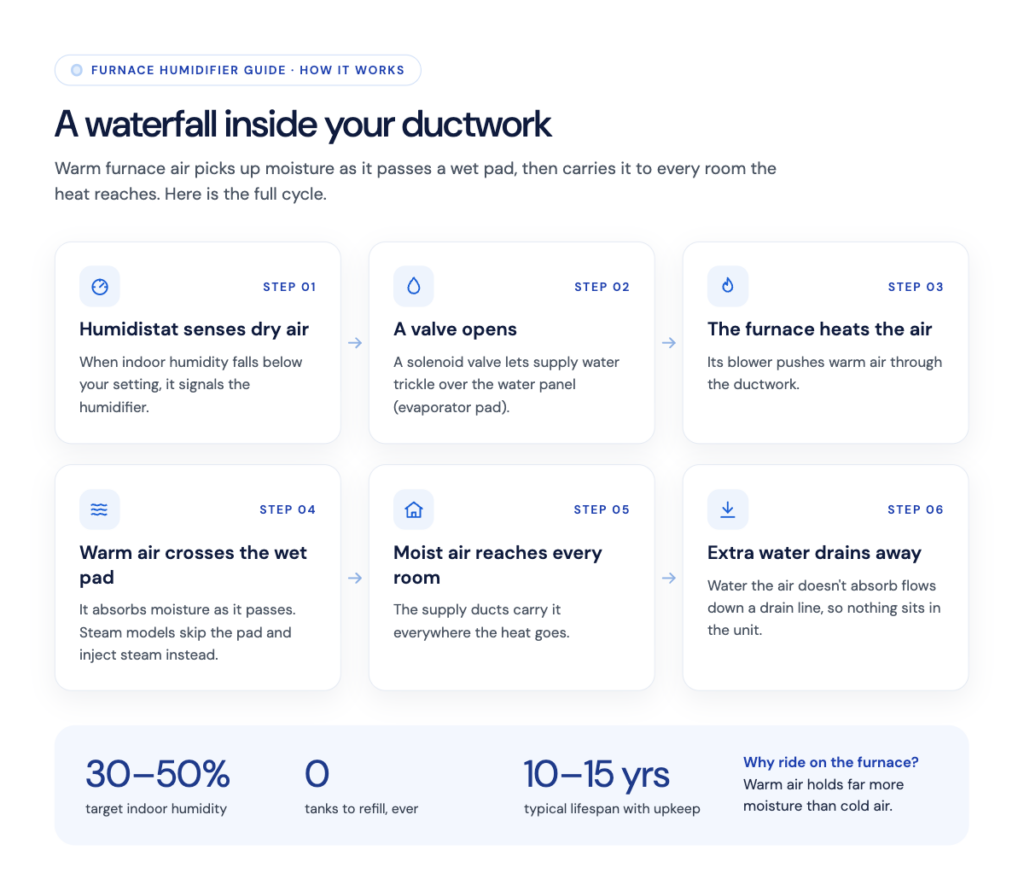
Humidifier on the Furnace: How It Works, Types, Costs and Whether You Need One
You turn the heat up, and somehow the house feels worse. Lips crack. Doorknobs bite back with a static zap. The hardwood…
Read article
 By aquairpure·
·13 min read
We may earn a commission when you buy through our links. It never affects our scores.
An air purifier is a fan and a filter. That is the whole machine. Everything that makes one purifier better than another comes down to how much air it moves, what the filter catches, how loud it is doing it, and what it costs to keep it running.
This guide is the map of the subject. It answers the questions most people arrive with, and links to the detailed guide for each one.
The short answers, if you want them now:
A portable air purifier pulls room air through one or more filters and pushes the cleaned air back out. The EPA’s guidance puts the core principle simply: “the longer the air cleaner runs, the more air it filters.” Higher fan speed and longer run time both increase how much of the room’s air actually passes through the filter.
A typical stack, in the order air meets it:
A True HEPA filter, by the US Department of Energy definition used in the industry, removes at least 99.97 percent of particles at 0.3 micrometres. That size is not an arbitrary choice. It is the most penetrating particle size, the hardest size for the filter to catch. Particles both larger and smaller are captured at even higher rates, which is why the common worry that “HEPA misses the small stuff” is backwards. Ultrafine particles are caught efficiently through diffusion.
The European EN 1822 grades, H13 and H14, are a different scale measured differently. H13 corresponds to roughly 99.95 percent and H14 to roughly 99.995 percent at the most penetrating particle size. In practice a well built H13 machine and a True HEPA machine perform similarly, and the number on the filter matters far less than how much air the machine pushes through it and whether the air can leak around the filter instead of through it.
“HEPA-type,” “HEPA-like,” “99 percent HEPA style,” and similar phrases are not HEPA. They are marketing, and they are legal to print.
Clean Air Delivery Rate is the single most useful number on the box. It is measured under AHAM’s AC-1 test standard and reported as three separate figures, in cubic feet per minute, for smoke, dust, and pollen. Smoke CADR is the toughest of the three, because smoke particles are the smallest, so it is the number to judge a purifier by.
The industry sizing shortcut is the two-thirds rule. AHAM states it directly: “the CADR of your air cleaner should be equal to at least two-thirds of the room’s area.” A 300 square foot room therefore wants a smoke CADR of about 200. That rule assumes an eight foot ceiling; with higher ceilings, size up.
For wildfire smoke, AHAM’s advice changes: choose a smoke CADR equal to the room’s full square footage rather than two-thirds of it. If you live where smoke season is a fact of life, size for that case and you are covered for everything else.
The EPA’s own sizing table is slightly more demanding than the two-thirds rule: a 300 square foot room calls for at least 195 CFM, and a 500 square foot room for at least 325 CFM.
Two warnings about CADR that manufacturers rarely volunteer:
Detail: CADR Explained, What Size Air Purifier Do I Need?, Coverage Area Claims: Why “Up to 1,000 sq ft” Misleads.
CADR tells you the flow. Air changes per hour tells you how often the entire room volume is cleaned. Four to five air changes per hour is the target for allergy and smoke sensitive households; two changes is enough for general background dust in a low pollution home.
The arithmetic is simple. Room volume in cubic feet, divided by the CADR in cubic feet per minute, gives the minutes per air change. A 300 square foot room with an 8 foot ceiling holds 2,400 cubic feet. A purifier delivering 200 CFM clears that volume in 12 minutes, which is 5 air changes per hour.
The reason a “1,000 square foot” purifier disappoints in a 1,000 square foot space is that the coverage claim on the box is usually calculated at a single air change per hour. That is a legitimate number and a nearly useless one. See Air Changes Per Hour and How to Calculate It.
Detail: Air Purifier Certifications, MERV vs HEPA Ratings Explained, Air Purifier Noise Levels, How Much Electricity Does an Air Purifier Use?.
Well established: removal of airborne particles. Dust, pollen, pet dander, mould spores, tobacco and wildfire smoke particles, and the particulate fraction of cooking emissions.
Conditional: gases and odours. This needs activated carbon, in quantity, and the carbon saturates and must be replaced. A purifier with 50 grams of carbon impregnated mesh will blunt a cooking smell for a while and will do very little for a continuous VOC source. See Do Air Purifiers Remove Odors? and VOCs at Home.
Overstated: virus and bacteria claims. A HEPA filter does capture the droplets and aerosols that carry pathogens, and filtration is a reasonable part of a layered approach, but a purifier is not a substitute for ventilation and it does not create a sterile room. Claims of “99.99 percent virus elimination” usually come from a sealed chamber test that resembles nothing about your living room. See Do Air Purifiers Remove Viruses and Bacteria?.
No. Carbon dioxide and radon. Neither is removed by filtration in any meaningful way. Rising CO2 means you need fresh air, not a filter. Radon needs testing and, where levels are high, a mitigation system. See Do Air Purifiers Remove CO2 or Radon?.
The EPA is blunt about the limits: “no air cleaner or filter will eliminate all of the air pollutants in your home,” and “filtration does not replace the need to control pollutants and ventilate.” Source control first, ventilation second, filtration third. A purifier running next to an unvented gas hob or a damp wall is treating a symptom.
The EPA advises avoiding air cleaners that intentionally produce ozone, and notes that “electrostatic precipitators, ionizers, UV lights without adequate lamp coatings, and plasma air cleaners may have the potential to emit ozone.” Ozone is a lung irritant. Ozone generators sold as air purifiers are a category to avoid outright.
Many mainstream purifiers include an ionizer as a switchable extra. On a CARB certified machine that switch is within the legal ozone limit, but the sensible default is to leave it off, since the filter is doing the work anyway. See Ionizers, Ozone, and Air Purifiers: What Is Safe?.
Placement. Somewhere the air can reach it from all sides, a few inches to a foot clear of walls and furniture, and in the part of the room you actually occupy. Behind the sofa is where good purifiers go to be wasted. Where to Place an Air Purifier.
Run time. Continuously, on a moderate speed, beats bursts on high. Particle counts rebound within an hour or two of switching off. Running costs are usually modest, though a large machine on high all day is not nothing. Should You Run an Air Purifier 24/7?, Air Purifier Fan Speed and Auto Mode Explained.
Windows. Closed, when the outdoor air is the problem, for example during smoke season or a high pollen count. Open, when the indoor air is the problem, for example after painting or while cooking. A purifier cannot out-filter an open window on a bad air day. Windows Open or Closed with an Air Purifier?.
Filters. HEPA filters are typically replaced every 6 to 12 months and carbon more often in a high odour home, but usage matters more than the calendar. Most HEPA filters cannot be washed: water destroys the fibre structure and a wet filter grows mould. Pre-filters usually can be. How Often to Change Air Purifier Filters, Can You Wash a HEPA Filter?, How to Clean an Air Purifier.
One large unit or several small ones. Air does not travel well between rooms, so two purifiers in two rooms usually beat one large purifier in a hallway. Within a single large open plan space, one properly sized unit is simpler and quieter than two small ones. One Big Purifier or Several Small Ones?.
A bad smell from the machine usually means a saturated carbon filter, a damp pre-filter, or something caught in the housing. Air Purifier Smells Bad: Causes and Fixes.
Replacement filters are where manufacturers make their margin, and third party filters are often a third of the price. Quality varies a great deal, and a poor fit that lets air bypass the filter defeats the point. Genuine vs Third-Party Replacement Filters, True Cost of Owning an Air Purifier.
A DIY option exists and it works. A box fan with MERV 13 filters, built as a Corsi-Rosenthal box, delivers a large amount of clean air for a small amount of money. It is loud and it is ugly, and during wildfire smoke it is a serious answer. DIY Air Purifier: Box Fan and Corsi-Rosenthal Box.
A purifier is one tool. Understanding what you are actually breathing decides whether it is the right one.
And for the specific situations people buy a purifier to solve:
An air purifier is also not the same machine as a humidifier, a dehumidifier, or your HVAC filter, though they are constantly confused: Air Purifier vs Humidifier vs Dehumidifier, Air Purifier vs Air Conditioner / HVAC Filter.
For airborne particles, yes, and this is well supported. For gases, it depends entirely on how much activated carbon the machine carries. For carbon dioxide and radon, no. The honest summary is that a correctly sized purifier measurably lowers particle concentrations in the room it is in, and does nothing for the room next door.
Start with a smoke CADR of at least two-thirds of the room’s square footage, or the full square footage for wildfire smoke or an asthma household. A 400 square foot living room therefore wants roughly 265 CFM minimum, and closer to 400 CFM for smoke.
Yes, on a moderate speed. Particle levels climb back within an hour or two of switching it off.
Not reliably. Price tracks design, app features, and brand more than it tracks clean air delivered. What consistently separates good from bad is verified CADR, sealed construction so air cannot bypass the filter, a real quantity of carbon if odours matter, sane noise at usable speeds, and affordable filters.
No. The filter does the work. If a machine has these features, prefer one that is CARB certified and leave the extras switched off.
It can reduce airborne allergens such as pollen and dander, which many people notice most at night in a bedroom. It does nothing about allergens already settled in carpet and bedding, which is a vacuum and laundry problem. This is general information, not medical advice.
AIR
You turn the heat up, and somehow the house feels worse. Lips crack. Doorknobs bite back with a static zap. The hardwood…
 AIR
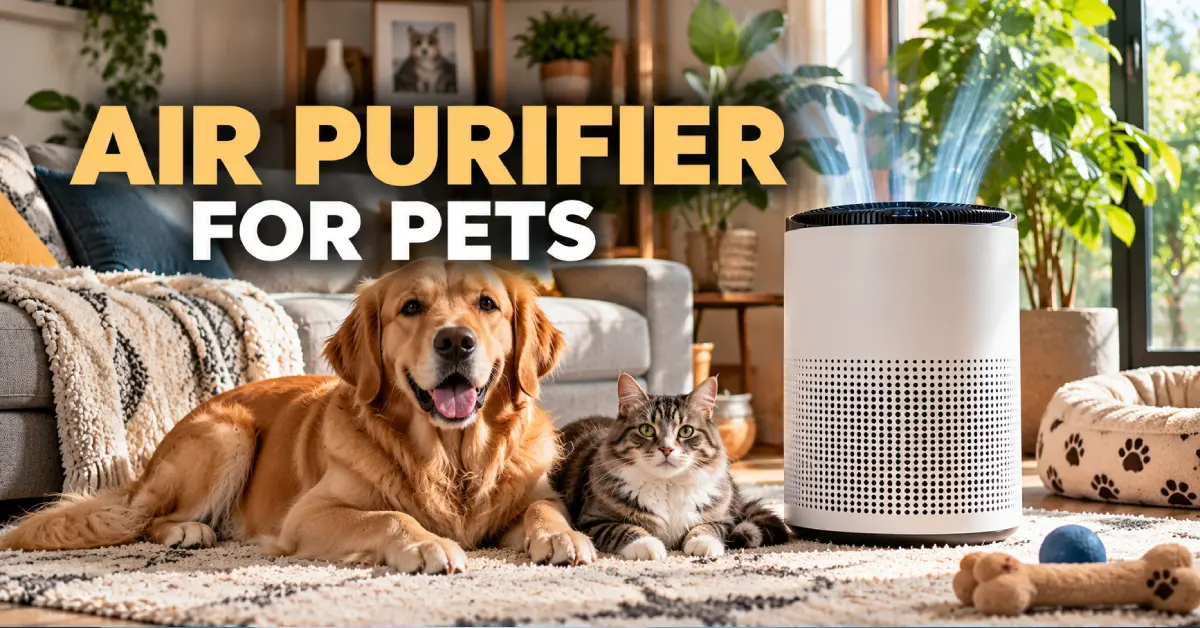
Our Top Pick Category Product Why It Wins Best Overall for Pet Owners Winix C909 Washable pre-filter, True HEPA, and real AHAM-verified…
 AIR
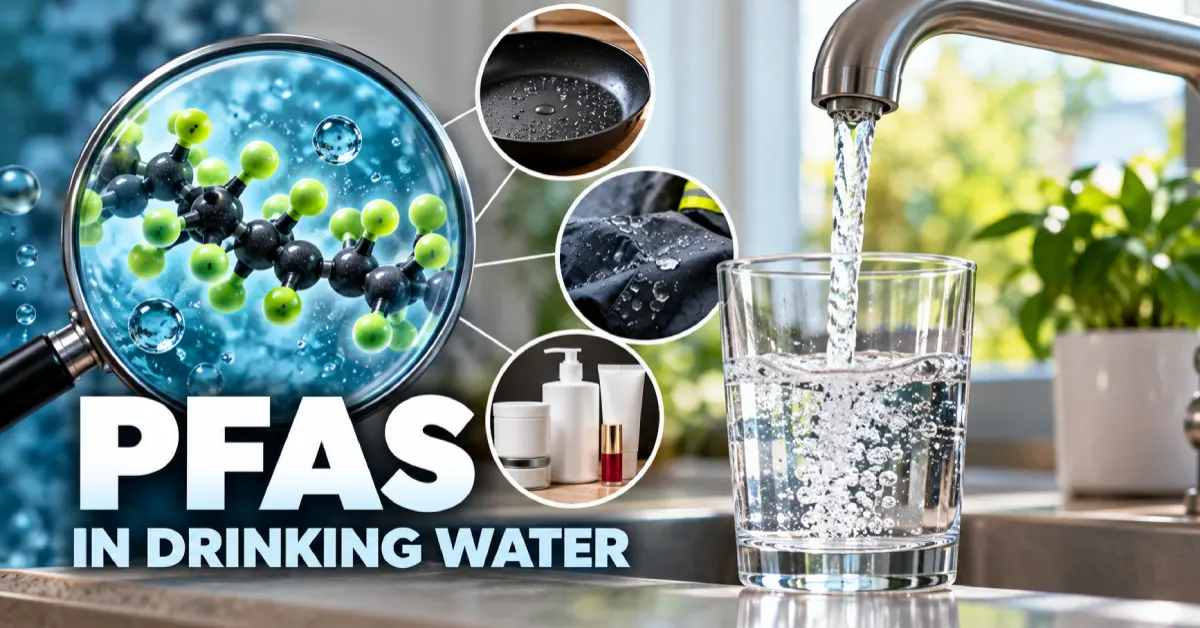
The question we get most about PFAS is not what are they? It is is it in my water, and does my…
 AIR
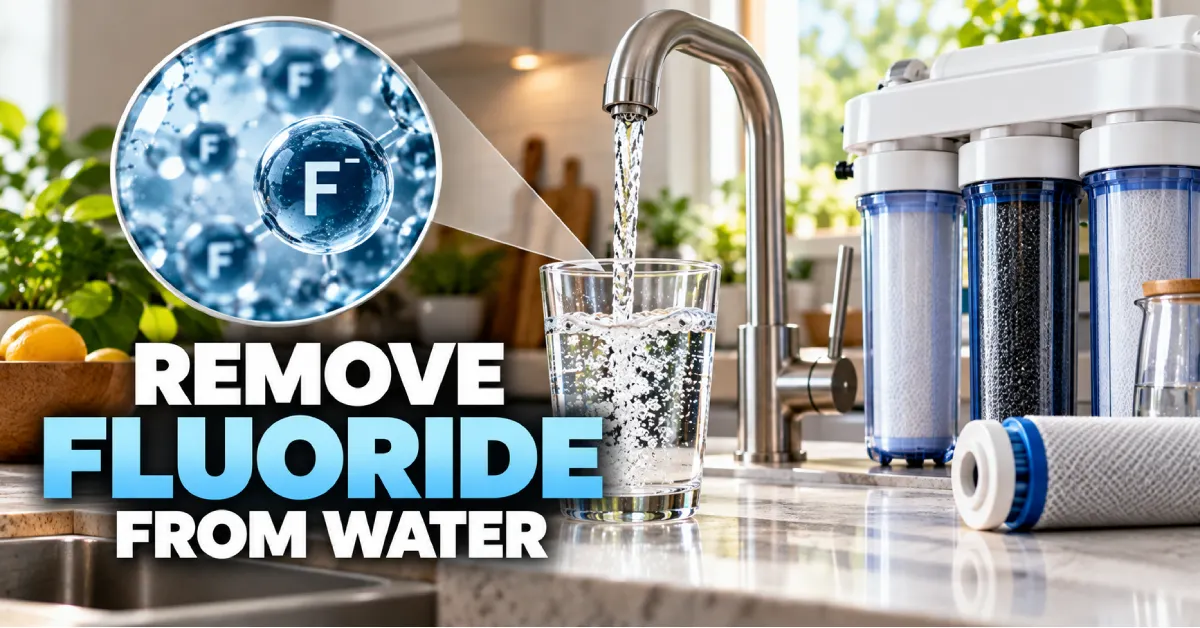
The question we get most about fluoride isn’t is it safe? I bought a filter pitcher, so the fluoride is gone, right?…